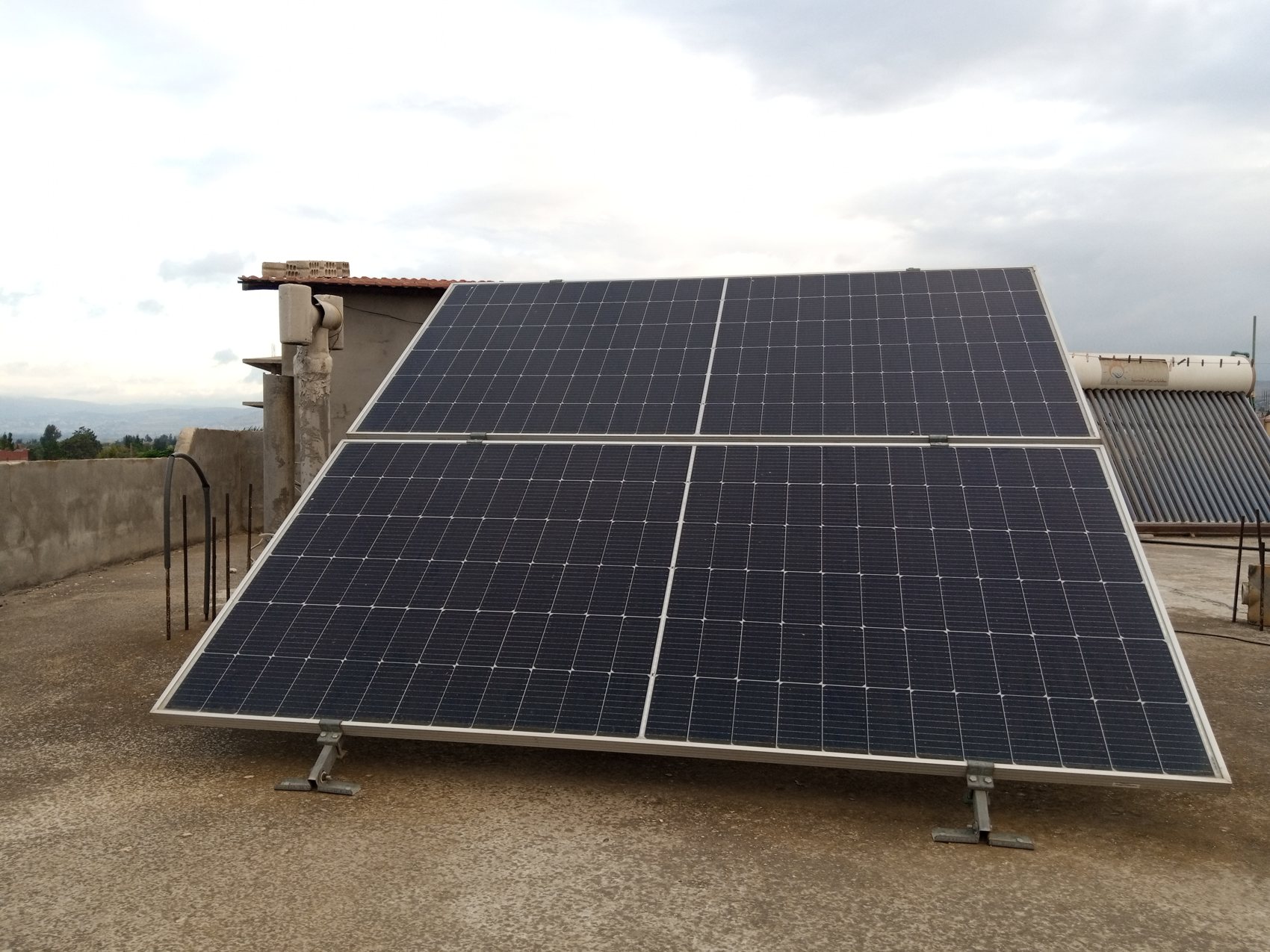
Why the result matters
Researchers affiliated with Dalian University of Technology and partner institutions in China and the United States have presented a method for producing more uniform perovskite solar-cell films as fabrication moves beyond tiny laboratory devices. Their paper appeared in Nature Communications on 31 October 2026. The key results were a champion 26.94% power-conversion efficiency for a small test cell (26.66% independently certified) and 24.60% for a larger micro-module with a 21.54 cm² aperture (24.02% certified). These are experimental devices, not commercial panels.
Building a better starting layer
Perovskites are promising photovoltaic materials because very thin active layers can convert sunlight into electricity efficiently. Scaling up, however, exposes variations in film thickness, orientation and crystallinity that can lower performance. The team used a two-step deposition process and a solution-based treatment to turn lead iodide (PbI₂) clusters into vertically arranged nanowires. The researchers say those nanowires acted as a scaffold when the next material was deposited, helping ions exchange and promoting more homogeneous perovskite formation.
What the experiments established
In-situ grazing-incidence small-angle and wide-angle X-ray scattering (GISAXS and GIWAXS) let the authors track ordering in the starting PbI₂ film and its conversion into the final absorber. The observations supported their explanation for improved film uniformity and preferred orientation. The best small device, measured through a 0.0618 cm² mask aperture, reached 26.94%, while the independently certified efficiency was 26.66%. A 21.54 cm² micro-module achieved 24.60% in the authors' measurement and a certified 24.02%. These different figures must not be conflated, and the small cell's performance should not be presented as the module result.
The limits of the finding
The study offers a reproducible research strategy worth exploring, but does not by itself establish industrial manufacturing yields, cost competitiveness or years of outdoor durability. Moisture resistance, encapsulation, sustained performance and factory-scale consistency all require separate evidence. The micro-module is a meaningful scale-up demonstration, not evidence that household rooftop panels using this exact process are on sale.
Source
M. Wang, Y. Zhao, Z. Suo and colleagues, “High-performance devices from lab-scale to micro module directed by vertical PbI₂ homogeneous growth perovskite films,” Nature Communications, published 31 October 2026, DOI 10.1038/s41467-026-79173-6. The publisher identifies this as an early peer-reviewed accepted article pending final editorial production.
Read more

New microscopy method reconstructs 3D images through scattering tissue without mechanical scanning
Georgia Tech and Emory researchers report VSM in Nature Communications: a fluorescence microscopy approach that reconstructs three-dimensional structures through light-scattering material using angular information and computation, without mechanical scanning.
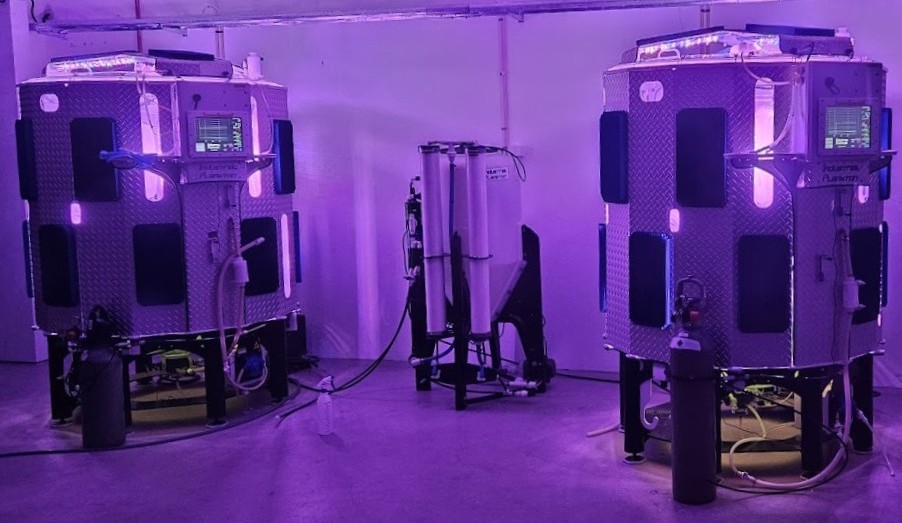
Microalgae platform produces 8.89 g/L of lipids by separating growth and oil accumulation
Researchers used a configurable hydrogel SLIM interface to alternate between microalgal biomass growth and lipid production, reaching 8.89 g/L in laboratory tests—not commercial biofuel output.
Tokyo researchers achieve 19.2 live-cell 3D volumes a second with nearly 400-fold faster chemical microscopy
A Nature Communications study reports label-free, three-dimensional chemical imaging of living cells at 19.2 volumes per second. The nearly 400-fold speed increase is relative to earlier MIP tomography, not every form of microscopy.

UK researchers recreate glass that changes colour like a 1,600-year-old Roman cup
University of Sheffield researchers developed a repeatable recipe for glass that appears green in reflected light and ruby red when backlit. The work reproduces the optical effect of the ancient Lycurgus Cup, but not necessarily the original Roman manufacturing method.
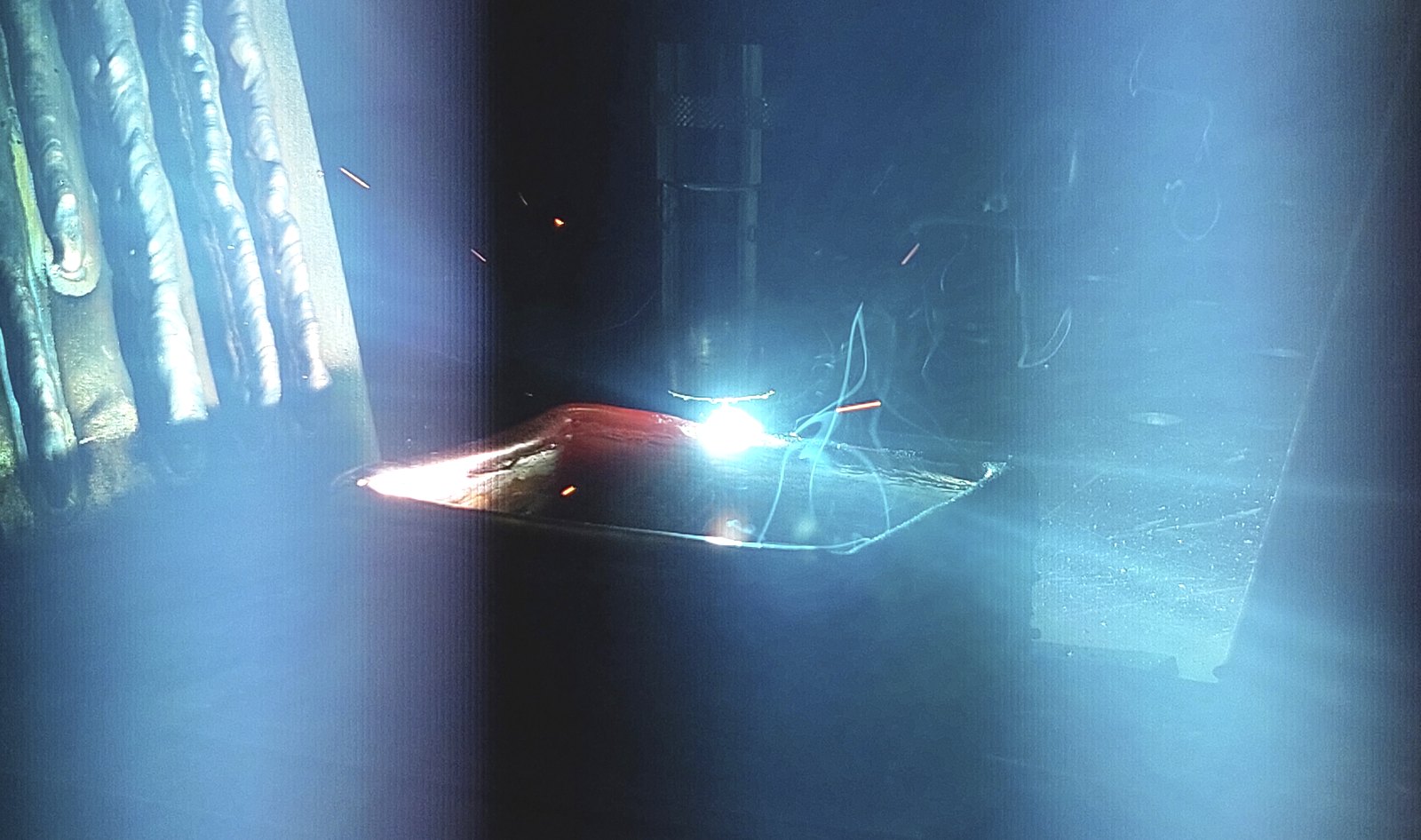
Scientists 3D-print metre-long titanium-alloy single crystals without a mould
Researchers in China have used pulsed wire-arc metal printing to produce metre-scale single crystals and complex lattices. The Nature study demonstrates a new manufacturing route, but industrial reliability and cost remain unproven.

CephCam uses adaptive OLED camouflage to challenge human and AI vision
An OLED-equipped model vehicle used environment-aware patterns to reduce detection by people and image-recognition systems in controlled tests; real-world invisibility remains unproven.